
Public Health Advocacy Academy
Empower yourself in public health advocacy. Discover diverse strategies and tactics from expert speakers and real-life examples to create impactful policy change.
Modules/Weeks
Weekly Effort
Discipline
School
Format
Cost
Course Description
Public health students across the country are incredibly qualified to be powerful advocates, but they often don’t have training to turn research and evidence into law, policy, and funding. Using real-life public health examples, this course teaches every tactic in the book to create change.
Expert speakers include:
- Flint, Michigan’s water crisis advocate Mona Hanna-Attisha, MD, MPH
- AIDS activist and lawyer, who led a successful class action to gain recognition for women to receive HIV/AIDS diagnoses, Terry McGovern, JD
- Founder of West Harlem Environmental Action (WE ACT), who succeeded in turning NYC’s bus fleet hybrid electric, Peggy Shepard
- Civil rights activist from Mississippi Freedom Summer, Bob Fullilove, EdD
- Expert health lobbyist, Ross Frommer, JD
- Public health graduate and elected official, Michelle Au, MD, MPH
What You Get
1-year access to your course
Revisit content anytime for 1-year from the date you enroll.
Earn a certificate
Earn a Columbia+ certificate upon completion.
Global network of peers
Connect with like-minded learners from around the world.
Expert-led instruction
Learn from Columbia faculty and industry practitioners.
What You Will Learn
By the end of this course, learners will be able to understand:
- Why advocacy is a core competency for all public health professionals, and why public health students are needed to do it
- How to identify and research policy issues and the target for your campaign
- Public health strategy and tactics
- Power mapping
- Coalition-building, communication, and movement-building
- Lobbying, legislative action, and appropriations
- Leading election campaigns, voting, and running for office
- Implementing administrative advocacy and petitions
- Organizing boycotts
- Filing lawsuits and impact litigation
- Taking direct action
Module Overview
- Module 1: Why Advocacy?
Module 1 will set the stage for understanding the profound impact of law, regulation, and policy on public health.
- Module 2: Power Mapping, Strategy & Tactics, Identifying the Target
Module 2 will dive deep into the foundations of civics, exploring government structures, public health authority, and legislative processes, complemented by real-world case studies on combating environmental racism and injustice.
- Module 3: Coalitions, Communications, & Building Your Organization
Module 3 will cover how to build strong coalitions, craft impactful messages, and connect with communities through storytelling. Gain insights into audience-specific communication, media engagement, and sustaining your organization for effective advocacy.
- Module 4: Lobbying, Ballot Initiatives, & Election Campaigns
Module 4 will engage with the nuances between advocacy and lobbying, guiding you through the process of effectively influencing policymakers and navigating the legal landscape for nonprofits and government entities.
- Module 5: Other Forms of Advocacy
Module 5 will explore administrative advocacy, litigation strategies, and the impactful role of direct action and civil disobedience, exemplified by the ACT UP HIV movement and WE ACT's environmental justice initiatives.
Instructors
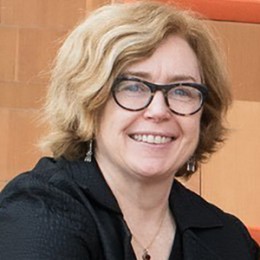
Terry McGovern is the Harriet and Robert H. Heilbrunn Professor and Chair of the Heilbrunn Department of Population and Family Health at Columbia University Mailman School of Public Health. She also directs the Program on Global Health Justice and Governance. In 1989, she founded the HIV Law Project and served as its executive director until 1999. Notably, she successfully litigated against various government levels, including S.P. v. Sullivan and T.N. v. FDA. Her research focuses on health and human rights, sexual and reproductive rights, gender justice, and environmental justice. McGovern co-edited "Women and Girls Rising: Rights, Progress, and Resistance: A Global Anthology." She has contributed to various health initiatives, including the Standing Lancet Commission on Adolescent Health and Wellbeing, the UCL-Lancet Commission on Migration and Health, and currently serves on the UNFPA Global Advisory Council and UNAIDS Human Rights Reference Group.

Heather Krasna is a public health workforce researcher, higher education career services practitioner, career coach and author. She is co-author of 101+ Careers in Public Health, 3rd Edition, and author of Jobs That Matter: Find a Stable, Fulfilling Career in Public Service. She currently serves on several committees, such as the de Beaumont Foundation's National Consortium for Public Health Workforce, ASPPH Framing the Future Task Force and Data Committee, and World Federation of Public Health Associations Education & Training Working Group. She provides training to health departments on strategic hiring approaches and recruitment marketing. Her research focuses on employment outcomes of public health graduates, labor market competition for graduates, and the governmental public health workforce. As Associate Dean of Career and Professional Development at Columbia Mailman, she leads efforts to ensure positive post-graduate outcomes for Mailman students.
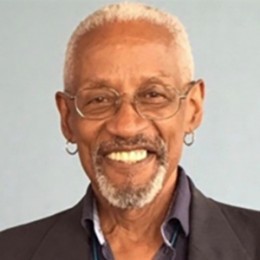
Robert E. Fullilove, EdD is the Associate Dean for Community and Minority Affairs, Professor of Sociomedical Sciences and co-director of the Cities Research Group. He has authored numerous articles in the area of minority health. Through the Bard College Prison Initiative, he serves as Senior Advisor to the public health program and teaches public health in New York State prisons. He previously served as a National Associate and on the Board of Health Promotion and Disease Prevention at the Institute of Medicine at the National Academy of Sciences, as co-chair of the Advisory Committee on HIV and STD Prevention at the Centers for Disease Control, and as a member of the National Advisory Council for the National Center for Complementary and Alternative Medicine at the National Institutes of Health. He has been awarded the Distinguished Teaching Award at the Mailman School of Public Health three times, and was awarded an honorary doctorate from Bank Street College of Education.
Peggy Shepard is co-founder and executive director of WE ACT for Environmental Justice and has a long history of organizing and engaging Northern Manhattan residents in community-based planning and campaigns to address environmental protection and environmental health policy locally and nationally. She has successfully combined grassroots organizing, environmental advocacy, and environmental health community-based participatory research to become a national leader in advancing environmental policy and the perspective of environmental justice in urban communities — to ensure that the right to a clean, healthy and sustainable environment extends to all. She has been named co-chair of the White House Environmental Justice Advisory Council as well as chair of the New York City Environmental Justice Advisory Board, and was the first female chair of the National Environmental Justice Advisory Council to the U.S. Environmental Protection Agency.

Kifah Shah is a lecturer of Health Policy and Management at Columbia University Mailman School of Public Health. She is a civic engagement, get-out-the-vote, campaigns, and organizing wiz. A nerd at heart, she loves to build power and communities through data and creative strategies. She has worked in the U.S., Europe, and Pakistan on issues related to labor/economics, migration, education, and racial/social justice. She wears many hats: entrepreneur & problem solver, a digital & field organizer, and an experienced quantitative & qualitative researcher. Her current work encompasses all of the following: coaching and consulting campaigns/organizations, researching communities and their growth, and teaching the next generation how to organize.

Renata Schiavo, PhD, MA, CCL is a Senior Lecturer at the Mailman School of Public Health, Department of Sociomedical Sciences. She is a passionate advocate for health equity and a committed voice on the importance of addressing and removing barriers that prevent people from leading healthy and productive lives. Over the last 25 years, Dr. Schiavo has worked at the intersection of public health, global health, health communication/social and behavioral change communication, healthcare, international development, and social innovation in the United States, and several countries in Africa, Latin America, Europe, and Eastern Asia. At Mailman she has been teaching courses on Society, Health Equity and Health Communication; Health Communication; Global Trends in Child Health and Development Programs; and Community-Based Participatory Research (CBPR).
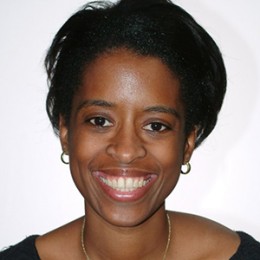
Heather Butts is an Assistant Professor at Long Island University, Lecturer at Columbia University Mailman School of Public Health and St. John's University School of Law, and a Board member of several non-profits that focus on young people and underserved populations. She has a background in psychology in education, as well as teaching and counseling young people. Ms. Butts received her BA from Princeton University, her JD from St. John's University School of Law, her MPH from Harvard University, and her MA in teaching from Teachers College Columbia University.