
Circular Economy Strategies for Reclaiming Value
Build practical circular economy strategies to reduce risk, unlock value, and redesign systems for long-term, sustainable growth.
Modules/Weeks
Weekly Effort
Discipline
School
Format
Cost
Course Description
Course Format: 3 Modules | Total Estimated Effort: 1.5 Hours
The way we produce, use, and dispose of materials today is no longer sustainable. Linear systems built on extraction, production, and waste are increasingly misaligned with the realities of resource constraints, climate impact, and long-term economic resilience.
This course introduces the circular economy as a practical framework for addressing these challenges. Circularity is not about doing less. It is about doing things differently to create value for business, society, and the environment. It connects sustainability with economic performance, showing how organizations can reduce waste, improve efficiency, and support more resilient systems.
The course moves quickly from foundational concepts into application. Through real-world case studies across sectors such as product design, apparel, logistics, and policy, you will examine how circular approaches are being implemented today. You will explore key strategies, including reuse, repair, recycling, rental models, and reverse logistics, and consider how these approaches scale in practice.
A central component of the course is applying circular thinking to your own context. Through guided exercises, you will identify a linear product or system and work step by step to reimagine it using circular principles.
By the end of the course, you will be able to:
- Clearly define the core concepts of circularity
- Identify circular strategies across design, production, and systems
- Analyze real-world case studies across industries
- Apply circular frameworks to a product, system, or process relevant to your work
This course is ideal for:
- Mid- to senior-level professionals seeking practical, applied expertise in circularity.
- Professionals seeking to build or grow businesses more sustainably
- Individuals looking to apply circular thinking within their organization or community
- Learners who want practical tools, not just high-level concepts
Circularity reflects how natural systems already operate. By aligning human systems with these principles, it becomes possible to reduce waste, support economic opportunity, and build more effective and sustainable ways of working.
What You Get
1-year access to your course
Revisit content anytime for 1 year from the date you enroll.
Earn a certificate
Earn a Columbia+ certificate upon completion.
Global network of peers
Connect with like-minded learners from around the world.
Expert-led instruction
Learn from Columbia faculty and industry practitioners.
What You Will Learn
This course builds from foundational concepts to practical application, equipping you with a clear understanding of circularity and the tools to apply it in real-world contexts. You will explore how circular systems function, examine how they are implemented across industries, and develop a structured approach to rethinking products, processes, and systems within your own work.
- Module 1: Circularity 101: What and Why
This module introduces the circular economy as a systems-based approach to driving environmental and economic impact. It explores why circularity is a critical pathway for reducing emissions, unlocking new value, and supporting social well-being in a world where human-made mass now exceeds all living biomass.
- Module 2: Step-by-Step Circular Case Studies
This module is a practical journey through the circular lifecycle, illustrated with real-world examples of design, repair, and reuse across industries such as electronics and textiles. It highlights actionable business models and the scaling considerations needed to maximize the lifespan and value of resources.
- Module 3: Thinking in Systems: Circularity as a Holistic Approach
This final module explores how to apply "reclaiming value" strategies across complex, interconnected systems that transcend sectors and borders. The module draws on diverse perspectives to rethink how value is defined, encouraging a more holistic view that connects circular practices with social, cultural, and environmental priorities. It concludes by examining how to transition circularity from a specialized strategy to a default operational mindset.
Instructors
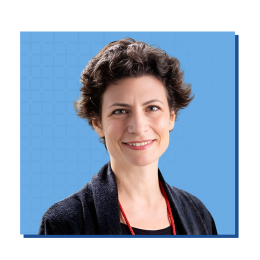
Sandra Goldmark is a Professor of Professional Practice and Associate Dean for Engagement and Impact at the Columbia Climate School. Her work focuses on the circular economy, sustainable design, systems thinking, and the practical application of these concepts across organizations and industries.
She is the author of Fixation: How to Have Stuff without Breaking the Planet, which examines how our relationship with material goods shapes economic systems, environmental outcomes, and everyday decision-making. Her work brings together design, education, and applied practice to translate complex sustainability challenges into actionable strategies.
Before joining the Columbia Climate School, Sandra served as a Professor of Practice at Barnard College, where she taught courses on sustainable design and circularity. She also founded Fixup, a New York City-based social enterprise that operated pop-up repair shops and educational events, repairing thousands of everyday objects, diverting significant material from landfill, and promoting more circular patterns of consumption.
Sandra has also led institutional sustainability and climate action efforts, helping to advance emissions reduction initiatives, expand sustainability-focused curriculum, and integrate circular approaches across campus operations. Her work has been featured in major media outlets, including The New York Times, The Wall Street Journal, MSNBC, and the BBC.
Originally trained as a theatrical set designer, she holds a bachelor’s degree from Harvard College and an MFA from the Yale School of Drama. Her interdisciplinary background informs a systems-level approach to circularity, grounded in both creative practice and real-world implementation.
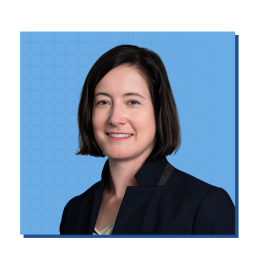
Kate Daly is a Managing Partner at Closed Loop Partners and CEO of the Center for the Circular Economy, where she leads initiatives to advance circular solutions across global supply chains. Her work focuses on scaling systems for reuse, recycling, and material recovery through cross-sector partnerships with corporations, governments, and innovators.
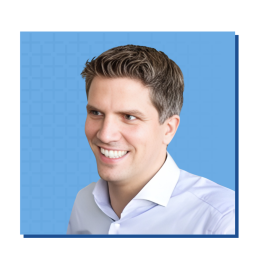
Chris Van de Voorde is the Founder of the Circular Value Institute and co-founder of JUUNOO, a company specializing in reusable and modular interior construction systems. His work centers on developing scalable circular business models that extend product lifecycles and reduce material waste in the built environment.

Thibaud Hug de Larauze is the co-founder and CEO of Back Market, a global marketplace dedicated to refurbished electronics. Under his leadership, Back Market has helped scale the circular economy by extending the life of consumer devices and challenging traditional models of consumption in the electronics industry.
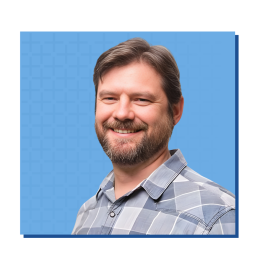
Nathan Proctor is Senior Director of the Campaign for the Right to Repair at U.S. PIRG, where he leads national efforts to expand consumer and independent repair rights. His work focuses on policy advocacy to reduce electronic waste, increase product longevity, and promote more equitable and sustainable systems of ownership.

Thom Almeida leads Circular Economic Systems initiatives at the World Economic Forum, where he works with global stakeholders to accelerate the transition toward circular models across industries. His work focuses on aligning business strategy, policy, and innovation to drive systems-level change and resource efficiency.